The Perimenopause Sleep Connection:
Why Your Hormones Are Stealing Your Rest
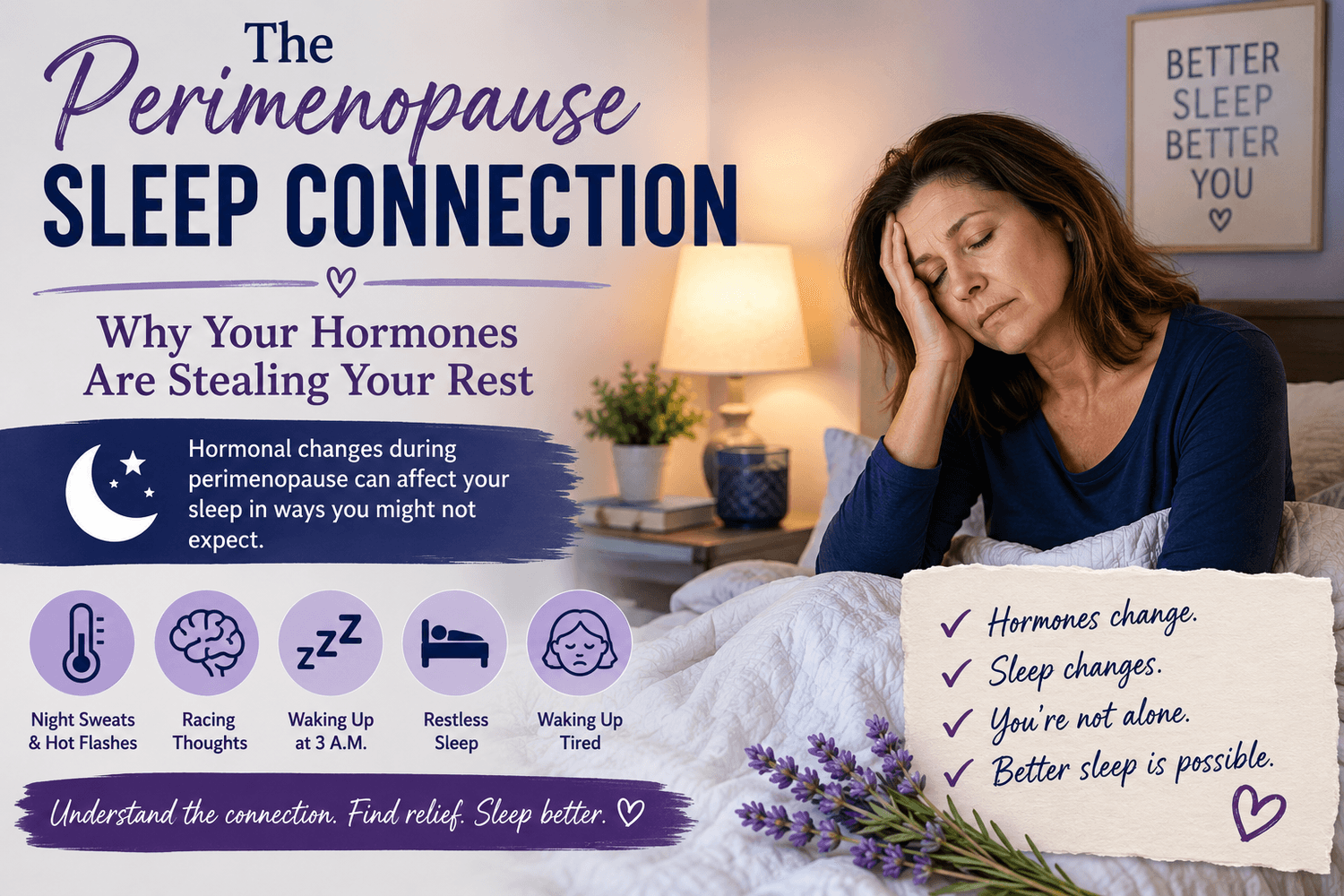
If you've found yourself lying awake at 3 a.m., waking up multiple times during the night, or feeling exhausted despite spending hours in bed, you're not alone.
Many women begin experiencing sleep problems during perimenopause and menopause, often without realizing that changing hormones may be playing a role.
One day you may be sleeping reasonably well, and the next you're tossing, turning, and wondering what happened.
While many factors can affect sleep, fluctuating hormones are often part of the story.
What Is Perimenopause?
Perimenopause is the transition period leading up to menopause.
For some women, it begins in their 40s, while others may notice changes earlier or later.
During this time, hormone levels—particularly estrogen and progesterone—can fluctuate significantly.
These hormonal changes can affect many areas of life, including:
Sleep
Mood
Energy levels
Body temperature
Stress levels
Memory and concentration
Not every woman experiences the same symptoms, but sleep disruption is one of the most common complaints.
Why Hormonal Changes Can Affect Sleep
Hormones help regulate many of the body's natural rhythms.
As estrogen and progesterone levels change, some women notice:
Difficulty falling asleep
Frequent nighttime waking
Early morning waking
Night sweats
Increased anxiety
Restless sleep
Even women who have always been good sleepers may suddenly find themselves struggling.
The 3 A.M. Wake-Up Call
One of the most frustrating experiences many women describe is waking up around 3 a.m. and being unable to fall back asleep.
Racing thoughts, worry, and a busy mind can make those early morning hours feel endless.
While there isn't one single reason this happens, hormonal changes, stress, and changing sleep patterns may all contribute.
If you've ever stared at the ceiling wondering why you're suddenly wide awake in the middle of the night, you're certainly not alone.
Night Sweats and Temperature Changes
Many women notice they become more sensitive to heat during perimenopause.
A room that once felt comfortable may suddenly feel too warm.
Night sweats, hot flashes, and temperature fluctuations can interrupt sleep repeatedly throughout the night.
Even small increases in body temperature can make it harder to stay asleep.
This is one reason many women begin searching for cooler bedding, lightweight sleepwear, and other ways to create a more comfortable sleep environment.
Stress and Hormones Often Work Together
Perimenopause often arrives during a busy stage of life.
Many women are balancing careers, family responsibilities, aging parents, financial concerns, and everyday stress.
When hormonal changes are added to the mix, sleep can become even more challenging.
For some women, the problem isn't falling asleep—it's staying asleep once stress and racing thoughts begin.
What May Help Support Better Sleep?
While there is no single solution that works for everyone, some women find it helpful to:
Keep a consistent bedtime
Reduce caffeine later in the day
Keep the bedroom cool
Use breathable bedding
Limit screen time before bed
Create a relaxing nighttime routine
Practice stress-reduction techniques
Small changes may not solve everything overnight, but they can help create an environment that supports better sleep.
When to Talk to Your Healthcare Provider
If sleep problems are affecting your daily life, it's worth discussing them with your healthcare provider.
Sleep difficulties can have many causes, and it's important to rule out other conditions that may be contributing to fatigue or poor sleep quality.
A healthcare professional can help determine whether hormonal changes or other factors may be involved.
Final Thoughts
If your sleep seems worse than it used to be, changing hormones may be one piece of the puzzle.
Perimenopause can affect sleep in ways many women don't expect, leaving them tired, frustrated, and wondering why they suddenly can't rest the way they once did.
The good news is that you're not imagining it, and you're certainly not alone.
Understanding the connection between hormones and sleep can be the first step toward finding strategies that help you feel more rested and comfortable during this stage of life.
Looking for More Sleep Support?
👉 Download the Free Sleep Guide
Affiliate Disclosure: This article may contain affiliate links. If you make a purchase or book a service through these links, I may earn a commission at no additional cost to you. As an Amazon Associate, I earn from qualifying purchases. Thank you for supporting Healthy Living & Thriving.