Why Am I
More Sensitive to
Heat After 40?
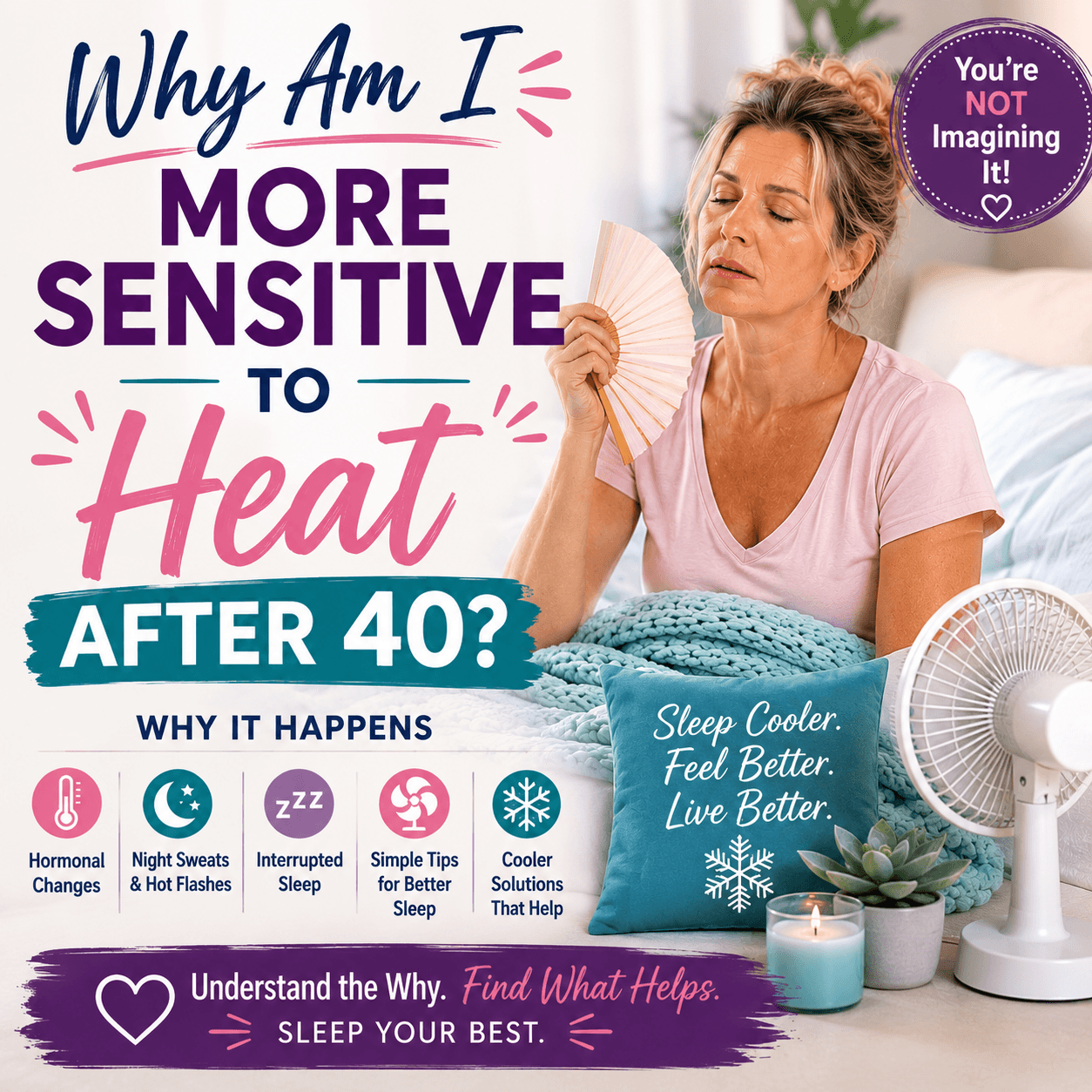
Have you noticed that you're getting hotter more easily than you used to?
Maybe you're kicking off the covers in the middle of the night, lowering the thermostat more often, or waking up feeling overheated and uncomfortable. If so, you're not imagining it.
Many women find that they become more sensitive to heat after 40, especially during the years surrounding perimenopause and menopause. While every woman’s experience is different, changes in hormones and temperature regulation can make warm environments feel much less comfortable than they once did.
Why Does Heat Feel Different After 40?
As women age, hormonal changes can affect the body's ability to regulate temperature.
For some women, this may lead to:
Feeling overheated more easily
Night sweats
Hot flashes
Sudden waves of warmth
Difficulty sleeping comfortably
Increased sensitivity to warm weather
Even small changes in room temperature can sometimes feel much more noticeable than they did in the past.
Why Does This Affect Sleep?
Sleep and temperature are closely connected.
Most people sleep best in a cooler environment. When your body becomes too warm, it can be harder to fall asleep and stay asleep throughout the night.
Many women report waking up feeling hot, sweaty, or uncomfortable, even when the room doesn't seem especially warm.
Interrupted sleep can contribute to:
Daytime fatigue
Difficulty concentrating
Irritability
Feeling less rested in the morning
Over time, poor sleep can affect both your energy levels and overall sense of well-being.
You're Not Imagining It
One of the most frustrating things about becoming more sensitive to heat is wondering whether the change is all in your head.
It isn't.
Many women notice that they become more sensitive to warmth as they get older, especially during the years surrounding menopause. If you've found yourself lowering the thermostat, searching for cooler bedding, or waking up feeling overheated during the night, you're certainly not alone.
Understanding that these changes are common can make it easier to focus on finding practical ways to stay comfortable and sleep better
.
Small Changes That May Help
While there isn't a one-size-fits-all solution, many women find relief by making a few adjustments to their sleep environment.
Keep Your Bedroom Cool
A cooler bedroom may help support more comfortable sleep. Many sleep experts recommend maintaining a cool sleeping environment whenever possible.
Choose Breathable Bedding
Heavy bedding can trap heat and make sleeping uncomfortable. Breathable sheets, lightweight blankets, and cooling bedding may help improve comfort throughout the night.
Wear Lightweight Sleepwear
Loose-fitting, breathable fabrics may help reduce overheating and improve nighttime comfort.
Improve Airflow
A bedside fan or improved room circulation can sometimes make a surprisingly big difference.
Stay Hydrated
Proper hydration supports overall wellness and may help you feel more comfortable during warmer temperatures.
Final Thoughts
Becoming more sensitive to heat after 40 is a common experience for many women. While the causes can vary, creating a cooler and more comfortable sleep environment may help support better rest and improved comfort.
Small changes to your bedroom, bedding, and nighttime routine can sometimes make a meaningful difference.
If waking up hot has become part of your nightly routine, you may want to explore cooling bedding, breathable sleepwear, and other simple sleep-comfort solutions designed to help you stay comfortable throughout the night.
Looking for Cooling Sleep Favorites?
Explore some of my favorite cooling sleep products, breathable bedding, and comfort-focused sleep essentials.
Affiliate Disclosure: This article may contain affiliate links. If you make a purchase or book a service through these links, I may earn a commission at no additional cost to you. As an Amazon Associate, I earn from qualifying purchases. Thank you for supporting Healthy Living & Thriving.