Why Is My Sleep Getting Worse As I Get Older?
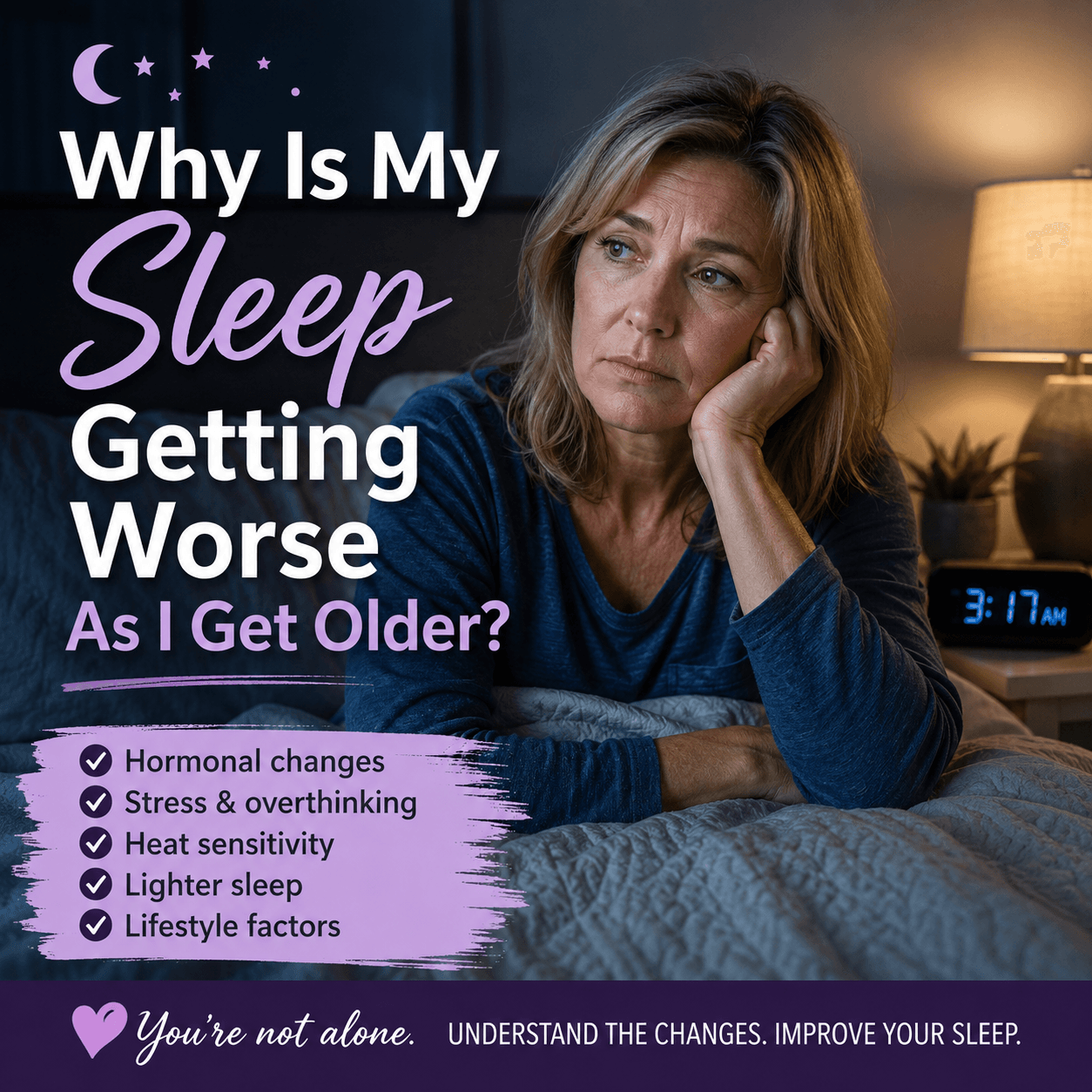
If you've found yourself staring at the ceiling at 3 AM, waking up tired, or wondering why sleep suddenly feels harder than it used to, you're not alone.
Many women notice changes in their sleep as they get older. What once felt effortless may now involve frequent waking, restless nights, feeling too hot, or struggling to fall back asleep after waking.
The good news is that understanding some of the common reasons behind these changes can help you create a more comfortable and supportive sleep routine.
Hormonal Changes Can Affect Sleep
For many women, changes in hormone levels during perimenopause and menopause can play a significant role in sleep quality.
Declining estrogen and progesterone levels may contribute to:
Night sweats
Hot flashes
Difficulty falling asleep
Frequent waking during the night
Lighter, less restorative sleep
Even women who never had sleep problems before may notice changes during this stage of life.
Stress Doesn't Always Stay in the Daytime
Life after 40 often comes with new responsibilities and challenges
.
Many women are balancing careers, aging parents, financial concerns, health issues, family responsibilities, and endless to-do lists.
Even when you're physically tired, your mind may still be busy processing everything from the day.
This can make it difficult to relax and fall asleep peacefully.
You May Be More Sensitive to Heat
Many women find that they become more sensitive to heat as they get older.
A bedroom that once felt perfectly comfortable may now feel too warm.
Overheating can lead to:
Tossing and turning
Night sweats
Frequent waking
Difficulty falling back asleep
Small changes such as cooling bedding, lightweight pajamas, breathable sheets, or lowering the bedroom temperature may help create a more comfortable sleep environment.
Sleep Becomes Lighter With Age
As we age, we tend to spend less time in deep sleep.
This means that things that never used to wake us up may suddenly become noticeable, including:
Household noises
Light from electronics
Pets moving around the room
Changes in temperature
Stress and anxiety
Many women find themselves waking more frequently throughout the night even though they still spend enough hours in bed.
Lifestyle Habits Can Have a Bigger Impact
Caffeine, alcohol, irregular sleep schedules, and screen time can affect sleep at any age, but some women notice they become more sensitive to these factors over time.
That evening cup of coffee that never bothered you in your 30s may affect your sleep differently now.
Simple habits such as maintaining a consistent bedtime, limiting late-night caffeine, and creating a calming nighttime routine may help support better sleep.
Your Sleep Environment Matters More Than You Think
Sometimes the problem isn't you—it's your bedroom.
A room that is too warm, too bright, too noisy, or simply uncomfortable can make quality sleep difficult.
Consider whether your sleep environment could benefit from:
Blackout curtains
Cooling bedding
A fan or white noise machine
Comfortable pillows
A supportive mattress or mattress topper
Small improvements can sometimes make a noticeable difference.
When to Talk With Your Healthcare Provider
Occasional sleep difficulties are common, but persistent sleep problems deserve attention.
If you regularly experience:
Severe daytime fatigue
Loud snoring
Breathing interruptions during sleep
Chronic insomnia
Significant changes in your sleep patterns
It's a good idea to discuss your concerns with your healthcare provider.
Final Thoughts
If your sleep seems to be getting worse as you get older, you're certainly not imagining it.
Hormonal changes, increased stress, heat sensitivity, lighter sleep, and lifestyle factors can all contribute to restless nights.
While aging may bring some changes to sleep, creating a comfortable sleep environment and developing supportive bedtime habits can often help improve sleep quality and help you wake feeling more refreshed.
Looking for More Sleep Support?
👉 Why Women Over 40 Wake Up Exhausted
👉 Why Women Over 40 Wake Up Hot at Night
Affiliate Disclosure: This article may contain affiliate links. If you make a purchase or book a service through these links, I may earn a commission at no additional cost to you. As an Amazon Associate, I earn from qualifying purchases. Thank you for supporting Healthy Living & Thriving.