Why You Feel Tired All Day: Could Low Iron or Vitamin D Be Part of the Problem?
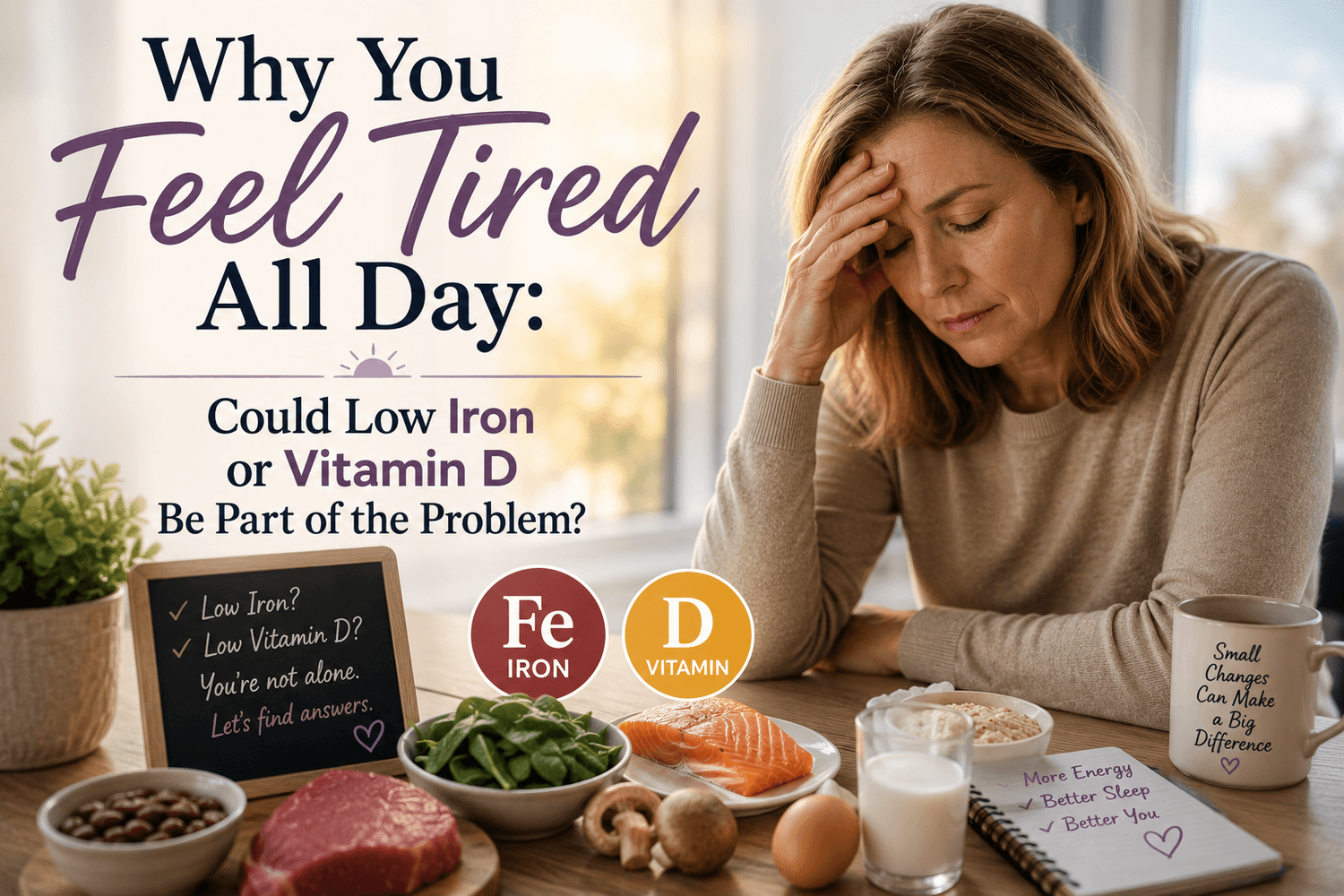
Do you feel tired all day, even when you've had a decent night's sleep?
Many women assume that daytime fatigue is simply a normal part of getting older, dealing with stress, or not sleeping well enough. While those factors can certainly play a role, low iron or Vitamin D levels may also contribute to persistent fatigue and low energy.
If you've been feeling exhausted, sluggish, or unable to get through the day without relying on caffeine, it may be worth discussing these common deficiencies with your healthcare provider.
Fatigue Isn't Always About Sleep
When we feel tired, it's natural to focus on our sleep habits. However, fatigue can have many possible causes, including:
Stress and anxiety
Poor sleep quality
Sleep apnea
Thyroid problems
Chronic illness
Low iron levels
Vitamin D deficiency
Certain medications
That's why it's important not to assume fatigue is simply "part of getting older."
Could Low Iron Be Contributing to Your Fatigue?
Iron helps your body produce hemoglobin, a protein in red blood cells that carries oxygen throughout the body.
When iron levels are low, your tissues may not receive enough oxygen, which can leave you feeling tired and weak.
Common symptoms of low iron may include:
Ongoing fatigue
Weakness
Shortness of breath with activity
Dizziness
Pale skin
Feeling cold more often than usual
Headaches
Difficulty concentrating
Women are particularly vulnerable to low iron due to menstruation, pregnancy, and certain dietary patterns.
Could Vitamin D Be Part of the Problem?
Vitamin D plays an important role in many body functions, including bone health, muscle function, and immune support.
Some people with low Vitamin D levels report symptoms such as:
Fatigue
Low energy
Muscle aches
Joint discomfort
Low mood
Feeling generally unwell
Because Vitamin D deficiency can develop gradually, many people don't realize their levels are low until they have blood work performed.
Why Women Over 40 Should Pay Attention
As women age, several factors can increase the likelihood of fatigue.
Hormonal changes, busy schedules, caregiving responsibilities, chronic stress, and health conditions can all affect energy levels.
Because symptoms such as fatigue, brain fog, and low motivation can overlap with many different conditions, it's easy to overlook potential nutrient deficiencies.
A simple conversation with your healthcare provider may help identify whether additional testing is appropriate.
When to Talk to Your Healthcare Provider
If you've been experiencing ongoing fatigue that doesn't improve with rest, it may be worth discussing your symptoms with your healthcare provider.
They may recommend blood tests to evaluate factors such as:
Iron levels
Ferritin levels
Vitamin D levels
Thyroid function
Blood counts
Identifying an underlying cause can help guide the most appropriate treatment plan.
Small Changes That May Support Energy Levels
While fatigue should always be evaluated appropriately, some healthy habits may support overall energy and wellness:
Prioritize quality sleep
Eat a balanced diet
Stay hydrated
Get regular physical activity
Spend time outdoors when possible
Follow your healthcare provider's recommendations regarding supplements
Remember that supplements are not appropriate for everyone and should not be started without medical guidance.
Final Thoughts
If you're feeling tired all day despite getting enough sleep, don't assume it's simply a normal part of aging.
Low iron levels and Vitamin D deficiency are two common issues that may contribute to fatigue in some women. While they're certainly not the only possible causes, they may be worth discussing with your healthcare provider if your exhaustion has become a daily struggle.
Sometimes understanding why you're tired is the first step toward feeling like yourself again.
Looking for More Sleep & Energy Support?
💜 Why Women Over 40 Wake Up Exhausted
💜 Why Am I So Tired During the Day but Awake at Night?
💜 Foods That May Promote Better Sleep
Affiliate Disclosure: This article may contain affiliate links. If you make a purchase or book a service through these links, I may earn a commission at no additional cost to you. As an Amazon Associate, I earn from qualifying purchases. Thank you for supporting Healthy Living & Thriving.