Alcohol and Menopause Sleep: Why Your
Favorite Evening Glass of Wine Is Keeping You Awake
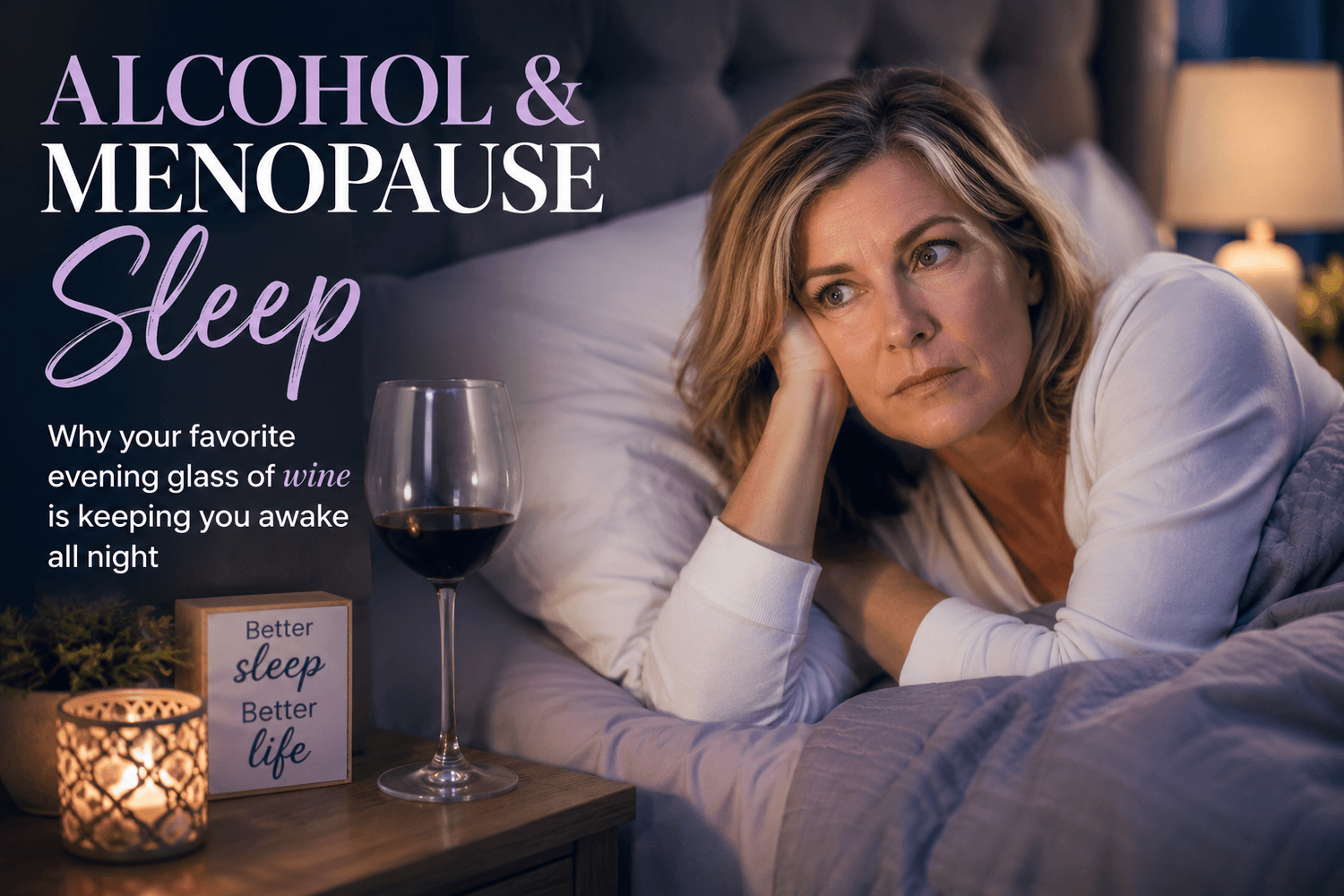
For many women, pouring a glass of wine at the end of a long day feels like the perfect way to relax and unwind.
After all, alcohol often makes us feel sleepy and helps us drift off faster.
But if you're in your 40s, 50s, or beyond and finding yourself awake at 2 or 3 a.m., that evening glass of wine may be doing more harm than good.
The hormonal changes that occur during menopause can dramatically change how your body responds to alcohol. What once felt relaxing can become an unexpected contributor to poor sleep, night sweats, and those frustrating middle-of-the-night wakeups.
Why Alcohol Affects Women Differently During Menopause
Many women notice they simply can't tolerate alcohol the way they once could.
That's not your imagination.
As estrogen levels decline, several changes occur that affect how your body processes alcohol:
Slower Alcohol Metabolism
Estrogen plays a role in regulating some of the liver enzymes responsible for breaking down alcohol. As hormone levels fluctuate and decline, alcohol may stay in your system longer than it did when you were younger.
Less Body Water
As we age, we naturally lose muscle mass and retain less water. Because alcohol is diluted by body water, the same glass of wine can result in a higher blood alcohol concentration than it did years ago.
Increased Sensitivity
Many women become more sensitive to alcohol during perimenopause and menopause. Even one or two drinks may trigger symptoms such as hot flashes, headaches, poor sleep, or next-day fatigue.
The Sedation vs. Sleep Myth
One of the biggest misconceptions about alcohol is that it improves sleep.
While alcohol can make you feel drowsy and help you fall asleep faster, sedation is not the same thing as restorative sleep.
Alcohol initially increases the activity of GABA, a calming neurotransmitter that slows brain activity and promotes relaxation. That's why you may feel sleepy shortly after drinking.
However, the story doesn't end there.
As your body begins metabolizing alcohol during the night, it can create a rebound effect that disrupts sleep.
Several hours after your last drink, your blood sugar may drop, and your body responds by releasing stress hormones such as cortisol and adrenaline. These hormones can cause sudden awakenings, often right in the middle of the night.
If you've ever fallen asleep easily after a glass of wine only to find yourself wide awake at 3 a.m., alcohol may be the culprit.
Alcohol Disrupts Deep Sleep
Alcohol doesn't just increase nighttime awakenings. It can also interfere with the quality of your sleep.
Research shows that alcohol can suppress REM sleep, the stage of sleep associated with memory, emotional processing, and mental restoration.
As a result, you may spend enough hours in bed but still wake up feeling tired, groggy, or mentally foggy the next day.
Many women mistakenly assume they need more sleep when what they really need is better-quality sleep.
The Hot Flash Connection
If menopause already has you dealing with hot flashes and night sweats, alcohol can make matters worse.
Alcohol is a vasodilator, meaning it widens blood vessels and increases blood flow near the skin's surface. This can raise body temperature and trigger flushing.
For women already struggling with fluctuating hormones and temperature regulation, even a single evening drink may increase the likelihood of:
Hot flashes
Night sweats
Overheating during sleep
Frequent awakenings
Many women are surprised to discover that reducing alcohol intake significantly improves nighttime comfort.
A Simple Experiment Worth Trying
You don't necessarily have to give up alcohol forever.
But if sleep has become a challenge, consider running a simple experiment.
For one week:
Skip alcohol completely or significantly reduce it.
Replace your evening drink with herbal tea, sparkling water, or another relaxing beverage.
Keep track of how often you wake during the night.
Notice any changes in hot flashes, night sweats, and morning energy levels.
Many women are shocked by how much better they sleep after just a few alcohol-free nights.
Better Ways to Unwind Before Bed
If you enjoy the ritual of relaxing in the evening, consider alternatives that support sleep rather than disrupt it.
Some ideas include:
Caffeine-free herbal tea
Reading a book
Gentle stretching
Meditation or deep breathing exercises
A warm bath or shower
Listening to calming music
Creating a relaxing bedtime routine can help signal to your brain that it's time to sleep without interfering with your natural sleep cycles.
The Bottom Line
That nightly glass of wine may feel relaxing in the moment, but during menopause it can become an unexpected sleep disruptor.
Alcohol can contribute to middle-of-the-night wakeups, reduce REM sleep, worsen hot flashes, and leave you feeling exhausted the next day.
If you've been wondering why your sleep suddenly seems worse than it used to be, your evening drink may be worth a closer look.
Sometimes one small change can make a surprisingly big difference in how well you sleep and how you feel the next morning.
Related Articles
• Why Am I Wide Awake at 3 AM? Common Causes of Middle-of-the-Night Wakeups
• Why Women Over 40 Wake Up Exhausted Even After a Full Night's Sleep
• The Perimenopause Sleep Connection: Why Hormones Affect Your Rest
Affiliate Disclosure: This article may contain affiliate links. If you make a purchase or book a service through these links, I may earn a commission at no additional cost to you. As an Amazon Associate, I earn from qualifying purchases. Thank you for supporting Healthy Living & Thriving.